Who Is Mahadev?
The Great God — beyond birth and death, fierce and tender, ascetic and householder, destroyer and refuge. The one the Vedas call Rudra, the yogis call Adiyogi, and devotees simply call Bholenath.
Mahadev (महादेव) means “the Great God” — the highest of devas. It is the most beloved of the thousand names of Shiva (शिव), “the Auspicious One”. Within the Trimurti, where Brahma creates and Vishnu preserves, Shiva is the transformer: he dissolves what is worn out so the new can arise. But in the Shaiva tradition he is far more than one function of the cosmos — he is Parameshvara, the supreme reality itself, of whom the universe is a dance.
What makes Mahadev unlike any other conception of divinity is his union of opposites. He is the naked ascetic smeared in cremation-ground ash, and the loving husband of Parvati and father of Ganesha and Kartikeya. He holds the deadliest poison in his throat, and the cooling crescent moon on his brow. He is Bhairava the terrifying, and Bholenath the innocent — so easily pleased that a single bilva leaf offered with love outweighs the grandest sacrifice. In him, devotees find the assurance that nothing — no fault, no past, no poison — places a sincere heart beyond grace.
“He is the lord of those who are awake, and of those who sleep; of the highest, and of the humblest. Shivam — auspiciousness itself.”
The Faces of the Formless
The scriptures say Shiva is nirguna — beyond all attributes — yet he takes form after form out of compassion, so that the mind may have something to hold.
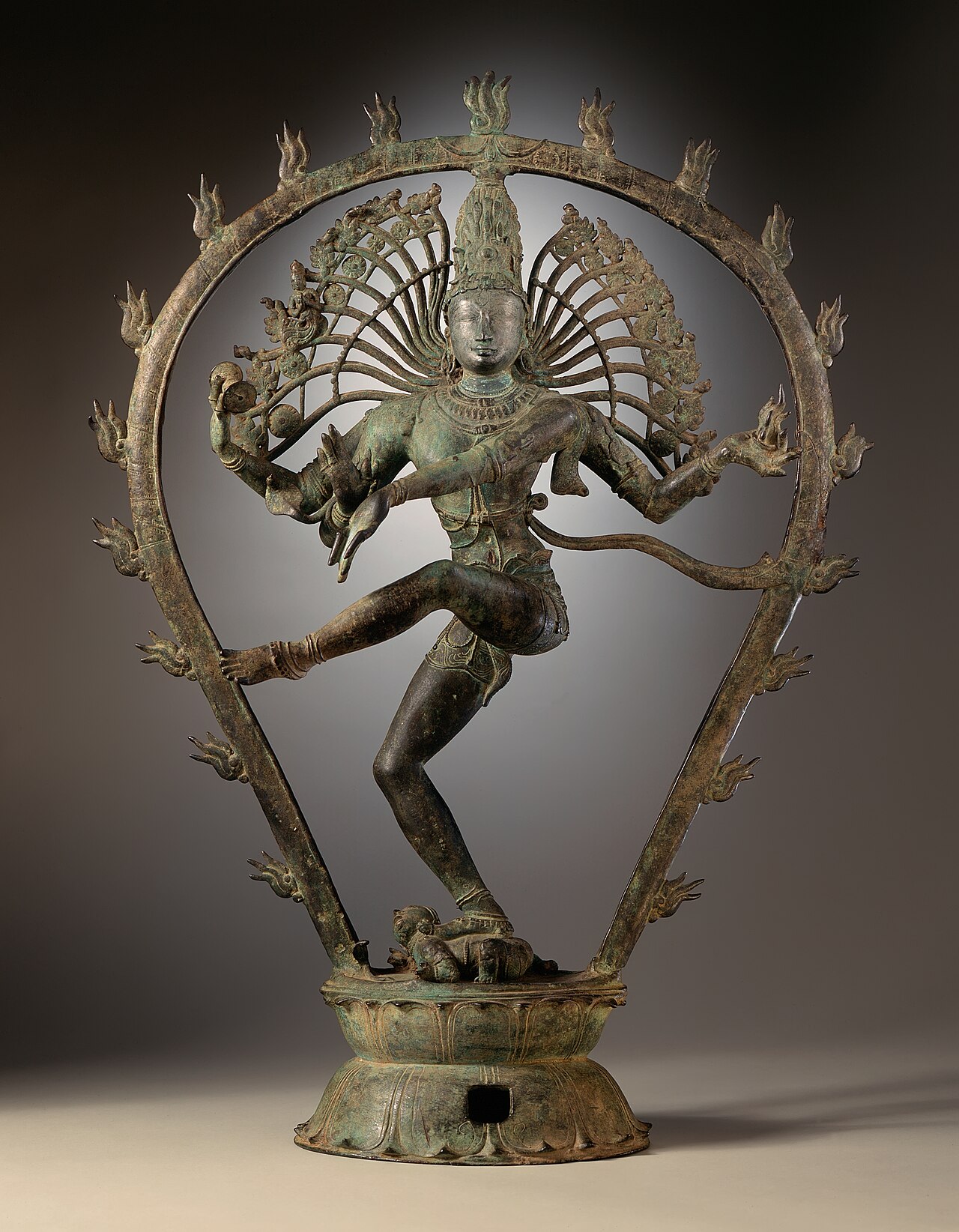
Nataraja — Lord of the Dance
In the Chola bronzes of Tamil Nadu, the whole of physics becomes sculpture. The drum in his right hand sounds creation; the flame in his left is dissolution. One hand says “fear not”; one points to the raised foot — the refuge of the devotee. Beneath the other foot lies Apasmara, the dwarf of forgetfulness and ego. Around it all burns the ring of fire: the cosmos itself, kept alive by his ananda tandava, the dance of bliss.
Stillness in motion, motion in stillness — Nataraja is the reminder that the universe is not a thing but a happening, and that at its centre is joy.
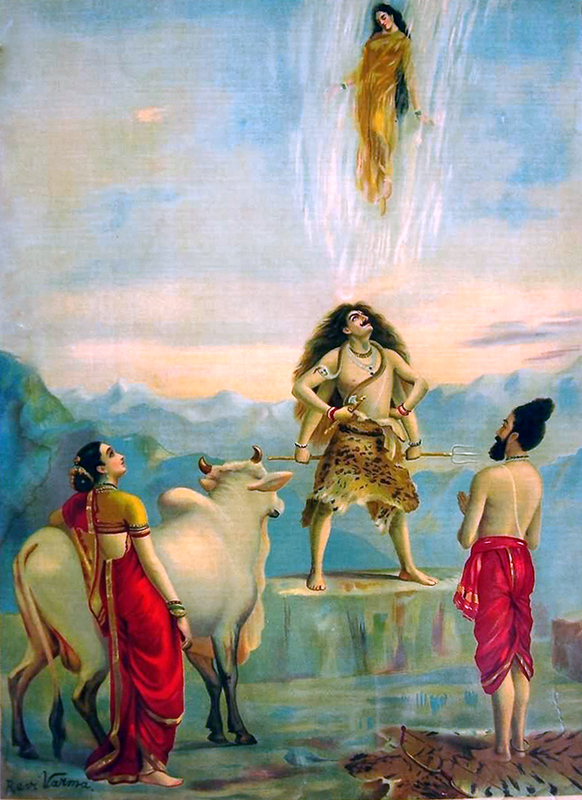
Gangadhara — Bearer of the Ganga
When King Bhagiratha's penance won the river of heaven for the salvation of his ancestors, the earth could not have survived her fall. Shiva stood beneath the cataract and received the Ganga in his matted locks, taming her torrent into the gentle streams that water the plains of India.
Gangadhara is grace as engineering: the Lord placing himself between heaven's overwhelming power and the fragile earth, so that blessing arrives as nourishment rather than catastrophe.
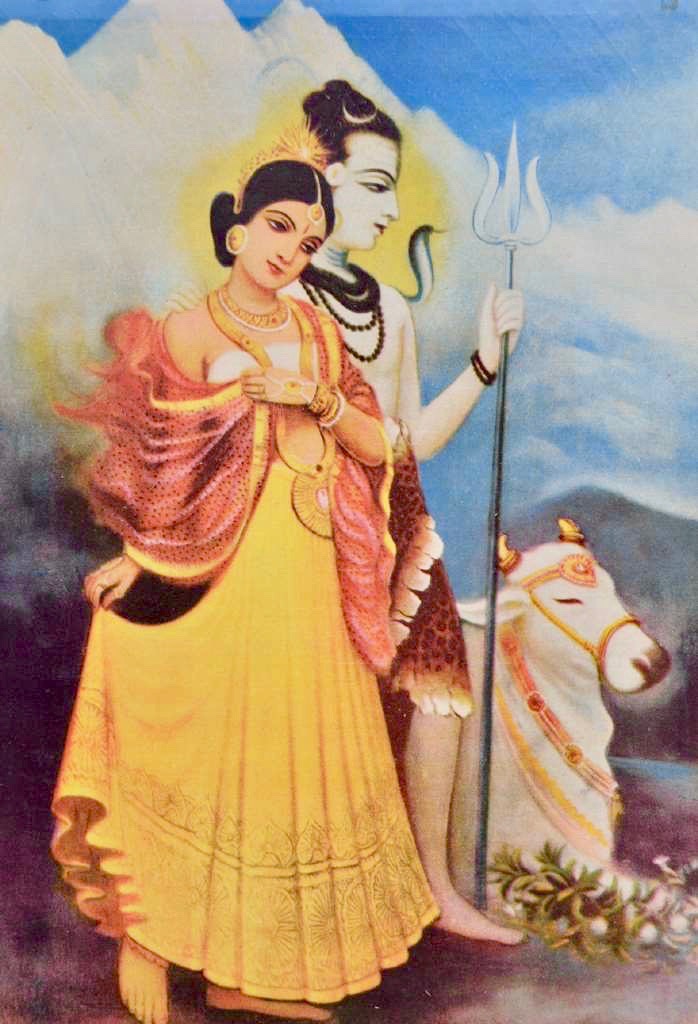
Umamaheshvara — With Parvati
Shiva without Shakti, the sages say, is shava — inert. With Parvati he is the model householder: the ash-smeared renunciate who became a bridegroom for love, whose wedding the whole universe attended, and whose family — with Ganesha, Kartikeya, Nandi, the serpents, the peacock and the mouse, natural enemies living in harmony — is itself a teaching.
In the form of Ardhanarishvara, the lord who is half woman, this union goes further still: Shiva and Shakti are one body, purusha and prakriti inseparable, the truth that the divine is neither he nor she but both and beyond.
Stories Devotees Never Tire Of
The Poison of the Ocean
When devas and asuras churned the cosmic ocean for amrita, the first thing to surface was halahala — poison potent enough to end all worlds. Every being fled. Shiva alone gathered it in his palms and drank. Parvati pressed his throat so it would descend no further; the moon was set on his crown to cool the burn. His throat turned blue — Neelakantha — and creation lived. The lesson is etched in his very body: greatness is the willingness to absorb the world's poison and return only grace.
Adiyogi and the Seven Sages
Long before scripture, tradition tells of a being who appeared in the upper Himalaya and danced wild, ecstatic, or sat utterly still for years. Seven seekers waited upon him for eighty-four years. When at last the first full moon of Dakshinayana rose, he turned south — as Dakshinamurthy, the silent teacher — and poured into them the mechanics of yoga. That moon is celebrated as Guru Purnima, and the seven became the Saptarishis, carrying the science of liberation to the corners of the earth.
The Pillar Without End
Brahma and Vishnu once disputed who was supreme, when an infinite column of fire split the earth and sky between them. Vishnu dove down as a boar for a thousand years; Brahma flew up as a swan — neither found any end. From the pillar of light Shiva emerged: the lingodbhava. That column is the Jyotirlinga, and the linga worshipped in every Shiva temple is its emblem — the formless marked, the infinite given an address.
Markandeya and the Conquest of Death
The sage's son Markandeya was fated to die at sixteen. When Yama's noose fell, the boy clasped the Shivalinga and chanted the Mahamrityunjaya. Shiva burst from the linga as Kalantaka — the ender of Death itself — and Markandeya was granted eternal youth. To this day the Mahamrityunjaya mantra is chanted for healing and protection, a doorway out of fear.
Reading His Form
Nothing on Mahadev's form is ornament. Every element is a sutra — a compressed teaching.
The Third Eye (Trinetra)
The eye of pure perception that sees beyond duality. When it opens outward it burns illusion — as Kamadeva learned — and when it opens inward, it is enlightenment itself.
The Crescent Moon (Chandrashekhara)
The waxing fifth-day moon on his crown marks mastery over time — for the moon measures time — and the cool nectar of mind held perfectly, neither waxing into excitement nor waning into dullness.
The Trident (Trishula)
Three prongs: creation, preservation, dissolution; sattva, rajas, tamas; waking, dream and deep sleep. All triads of existence held in one hand — and pierced by the single point beyond them.
The Damaru
The two-headed drum whose beat began the universe. From its fourteen sounds, tradition says, Panini received the maheshvara sutras — the seed of all language and grammar.
The Serpent Vasuki
Coiled thrice around his neck — past, present, future. The most feared of creatures rests on him as jewellery: ego and danger, fully tamed, become adornment.
Vibhuti — The Sacred Ash
Ash is what remains when everything burnable is burned. Wearing it, Mahadev declares the end of all that is impermanent — and devotees wear the tripundra, three lines of ash, as the same reminder.
Nandi — The Bull
His mount and foremost devotee, who waits eternally facing the sanctum. Nandi is dharma on four legs — strength made gentle by devotion, desire yoked to the divine. Whisper a wish in Nandi's ear, the tradition says, and he carries it to the Lord.
Rudraksha
“The tears of Rudra” — seeds said to have fallen as tears of compassion after aeons of meditation on the welfare of beings. Strung in malas of 108, they count the repetitions of his name.
Now Meet Him in Sound
What the icon shows, the mantra is. Move from his form to his name — the five sacred syllables and the great hymns.
Explore the Mantras